Investing in Local Talent: How Education Waivers Open Doors to Child Welfare Careers
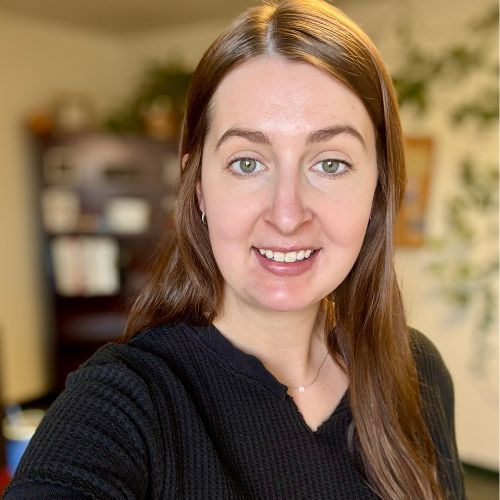
Lindsay Rochlitz served five years as a dedicated employee in rural Sedgwick County, a small community. She worked in eligibility for programs like SNAP and Medicaid, and then in child support. While pursuing her bachelor’s degree, she accepted the position of Child Welfare and Adult Protection Case Manager. She had an associate’s degree in psychology and a long-standing interest in child welfare. When a caseworker position opened up, she knew it was her chance. Although the job requires a four-year degree, Lindsay was able to get extra time to complete her degree with an education waiver.
«I just was grateful that this was an option to be able to do that… with it being such a small community, it is hard to get good applicants and my supervisor was familiar with me and my background…,” shared Lindsay. “I felt confident that I would be able to do the position. So, I think it really helps the smaller counties,» said Lindsay about the education waiver.
In Colorado, county departments of human services, especially those in rural areas, often face significant challenges recruiting qualified staff for certified child welfare roles, such as caseworkers. State requirements typically mandate a bachelor’s degree with relevant coursework, creating a barrier to entry for talented individuals who are already dedicated to serving their communities but have not yet completed their education.
This is where the Education Waiver Program steps in as a critical recruitment and retention tool. The education waiver is an allowance that permits a county to hire an individual for a certified child welfare position—most commonly a caseworker—before they have fully completed their bachelor’s degree. The purpose is to fill essential roles in hard-to-staff communities and to invest in local talent.
“What we offer is an educational waiver so that counties can hire somebody who’s in the process of completing a bachelor’s degree. They have two years to complete their degree and then with an optional one-year extension if something comes up and they need additional time,» said Kathy Clark, Stipend IV-E and Training Specialist in CDHS’s Division of Child Welfare, who oversees the program.
Since the program began in 2008 , 76 professionals have completed a degree with a waiver in Colorado. Additionally, there are an additional 24 individuals currently using an educational waiver. In addition to recipients in rural counties, urban counties have also used the waivers to hire students who are on scholarship before they complete their degrees. The waiver recipients are required to enroll in a bachelor’s degree program in social work or a related field. Kathy is responsible for tracking recipients’ progress every six months, and once the recipient has completed their degree, recipients work withKathy to provide their transcripts.
“Audrey Johnson in Kiowa County started as the receptionist at the county.” Kathy shared. “She got an education waiver to work as a caseworker while completing her bachelor’s degree online at Metropolitan State University of Denver (MSU Denver). Then she completed her master’s degree and became a supervisor and is now the interim director of the county’s human services department.”
Lindsay already had an associate’s degree in psychology, so she committed to earning a Bachelor of Arts in Psychology with a minor in social work, which allowed her to complete the program faster within the two-year waiver limit. She completed her coursework entirely online through MSU Denver. Completing a degree while working full-time in a high-demand role was challenging. A crucial element of her success was the support of her supervisor, who allowed her to use downtime at work to complete school assignments. This support significantly eased her homework load and allowed her to maintain her family life, including caring for her young son. Her experience in previous county roles also helped her build rapport with clients. By investing in Lindsay, Sedgwick County retained a long-term resident with established ties to the community.
Lindsay’s key piece of advice for other professionals considering the program is to “talk to the supervisor for child welfare just to see what the workload is like. . . if they can let them do some of their school work on their downtime from their case work, I think that is really beneficial and helps ease the load of homework and things on top of your day-to-day casework.”Lindsay’s experience highlights the power of the waiver in providing career advancement and stability in rural areas. The Education Waiver Program is a proven success, cultivating committed, community-based child welfare workers and ensuring critical services remain available to families across Colorado. For more information about the program, reach out to Kathy Clark, kathy.clark@state.co.us.


More Posts